
Apostle MiniMax® High Efficiency Cell-Free DNA Isolation Kit
- Extracts cell-free DNA (cfDNA) ≥80 bp from plasma, serum or urine samples in manual or automated mode
- Uses Apostle MiniMax® magnetic nanoparticle technology (no phenol or chloroform needed)
- Supports various blood collection tubes
- Yields cfDNA suitable for a broad range of subsequent methods, including sequencing and PCR
- Enables applications in liquid biopsy research, cancer research and biomarker discovery

Request a Quote


Order Apostle MiniMax® cfDNA Kits or Components Right Away
Apostle MiniMax® cfDNA Extraction Workflow

- Lyse the sample
- Bind cfDNA to Apostle MiniMax® magnetic nanoparticles
- Separate the nanoparticles from contaminants and wash them
- Elute cfDNA from the nanoparticles and transfer to a new tube or plate
Data and Performance

Figure 1. DNA was extracted from 1 mL of plasma collected in cfDNA Tube 1 using the Apostle MiniMax® High Efficiency cfDNA Isolation Kit and Kit A. The extractions represent technical replicates, and both replicates extracted using the Apostle MiniMax® cfDNA Kit were nearly identical. In contrast, the replicates extracted using Kit A had two distinct traces. Isolated cfDNA was characterized using an Agilent Bioanalyzer 2100; the peaks at 35 bp and 10,380 bp are internal markers. Most cfDNA fragments cluster around the 165‑170 bp mononucleosome peak, with additional dinucleosome and trinucleosome peaks near 320‑350 bp and 480‑550 bp, respectively.

Figure 2. Left: DNA ladder was spiked in serum, followed by isolation with the Apostle MiniMax® High Efficiency cfDNA Isolation Kit. The isolated DNA was characterized using an Agilent Bioanalyzer 2100 (red curve), and compared with the original DNA ladder (blue curve). The Apostle MiniMax® Kit offers superior DNA recovery efficiency of >95% across the range of 80‑3,000 bp. Right: DNA ladder was spiked in serum, followed by isolation with the Apostle MiniMax® cfDNA Kit (red curve) and a major alternative product (blue curve). The isolated DNA was characterized using an Agilent Bioanalyzer 2100. The Apostle MiniMax® cfDNA Kit offers superior DNA enrichment efficiency of 2x‑10x.

Figure 3. Apostle MiniMax® High Efficiency cfDNA Isolation Kit was used to extract DNA from 1 mL of plasma collected in three types of stabilization containers, referred to here as cfDNA Tube 1, EDTA Collection Tube, and cfDNA Tube 2. A market-leading column-based kit (Kit A) was also used to extract DNA from 1 mL of plasma from cfDNA Tube 1, EDTA Collection Tube, and cfDNA Tube 2. A second bead-based kit (Kit B) was used to extract DNA from the EDTA Collection Tube. DNA yield was quantified using the Quant‑iT PicoGreen dsDNA assay kit (Thermo Fisher Scientific). The error bars represent the standard deviation of three technical replicates. For each tube type, the Apostle MiniMax® cfDNA Kit extracted a higher total yield of DNA. DNA size was analyzed on an Agilent Bioanalyzer 2100. For all three tube types, the Bioanalyzer traces indicate the DNA extracted correlates with the expected sizes of cfDNA (~170 bp).

Figure 4. Left: 20 μL of a 170 bp synthetic DNA fragment containing the EGFR C2573T>G L858R mutation was spiked into 1 mL of TE buffer (blue) or serum (red) at concentrations ranging from 1 ng/μL to 0.001 ng/μL. The Apostle MiniMax® High Efficiency cfDNA Isolation Kit was used to isolate the DNA fragments. A) The qPCR amplification plot shows highly overlapping curves for the isolated DNA fragments and the original synthetic DNA solution at the different concentrations. B) To quantify the amount of DNA that the Apostle MiniMax® cfDNA Kit can recover, a qPCR standard curve was generated using the original synthetic DNA solution. The DNA isolation recovery rate was calculated to be >90% for the Apostle MiniMax® cfDNA Kit. Right: qPCR performance was compared between the Apostle MiniMax® cfDNA Kit and one other market-leading column-based kit (Kit A). The Apostle MiniMax® cfDNA Kit outperformed Kit A for DNA extracted from all three collection tubes presented.

Figure 5. Left: DNA isolation from varying volumes of plasma. Nucleosomes were spiked into plasma to ensure enough DNA was present for quality control. The Apostle MiniMax® High Efficiency cfDNA Isolation Kit isolated nearly all the input DNA, while Kit 2 isolated less DNA from larger plasma volumes. Right: Isolation of DNA from 1–5 mL of EDTA plasma. Yields were highest with the Apostle MiniMax® Kit for 3–5 mL, and yields were similar across all kits at 1 mL.
Frequently Asked Questions
cfDNA concentration varies significantly, ranging from 1–100 ng per mL of plasma. In healthy donors, cfDNA concentrations are typically between 1 to 15 ng/mL of plasma.
No. NanoDrop spectrophotometers are not suitable for cfDNA characterization. Due to the low concentration of cfDNA in human plasma, the concentration of isolated cfDNA can be less than
The Agilent 2100 Bioanalyzer with the high-sensitivity DNA kit (detection limit 5 pg/μL), or quantitative PCR (detection limit 1%-0.1% copy sensitivity) are sensitive and accurate methods for cfDNA quantification. Fluorometric methods, like Qubit™ or PicoGreen®, can be used for a rough estimation of cfDNA concentration.
Yes, the kit has been demonstrated to work for cfDNA isolation from these fluids. A centrifugation step is required to remove cellular components before cfDNA isolation.
No, the kit can't be used for gDNA isolation from blood. The chemistry of this kit is specifically designed for circulating cell-free DNA isolation from body fluids.
Yes, the kit is a bead-based kit and is automation-agnostic. We have demonstrated it on Biomek i-Series Workstations and KingFisher platforms.
Yes, this is normal. cfDNA concentration varies significantly between different samples, ranging from 1 to
This kit has a scalable format for flexible input volumes, from 0.2 mL to 5 mL, or even higher if the container volume capacity allows. The standard protocol included with this kit provides instruction for cfDNA isolation from 1 mL, 2 mL and 5 mL plasma. A supplemental protocol for processing 10 mL plasma is also available.
To prevent gDNA contamination in the eluate, it is important to handle blood samples properly. Delays in processing blood collected in EDTA tubes can lead to cell lysis, which releases gDNA into the plasma. Additionally, ensuring the complete removal of cellular components during the isolation process is crucial to avoid contamination. Be cautious with the storage of whole blood; freezing can lead to significant cell breakage and result in gDNA contamination. Following these best practices can help minimize the risk of gDNA contamination.
Yes. We suggest using 20 μL of elution solution per 1 mL of the initial sample. You can adjust the elution volume when needed.
Still have questions? We’re here to help—reach out anytime.
Specifications
| Application | Extraction of cfDNA ≥80 bp |
| Technology | Apostle MiniMax® magnetic nanoparticle technology |
| Recovery | > 95% |
| Sample Amount | 1–5 mL (scalable) |
| Sample types | Plasma, serum, urine |
| Processing mode | Automated or manual |
| Kit Sizes |
|
| Kit Components and Storage Conditions | Magnetic Nanoparticles (2 to 30°C), Proteinase K (2 to 30°C), Sample Lysis Buffer (15 to 30°C, in dark), Lysis Binding Solution (15 to 30°C, in dark), Wash Solution (15 to 30°C, in dark), 2nd Wash Solution (15 to 30°C), Elution Buffer (15 to 30°C) |

Frequently Used With
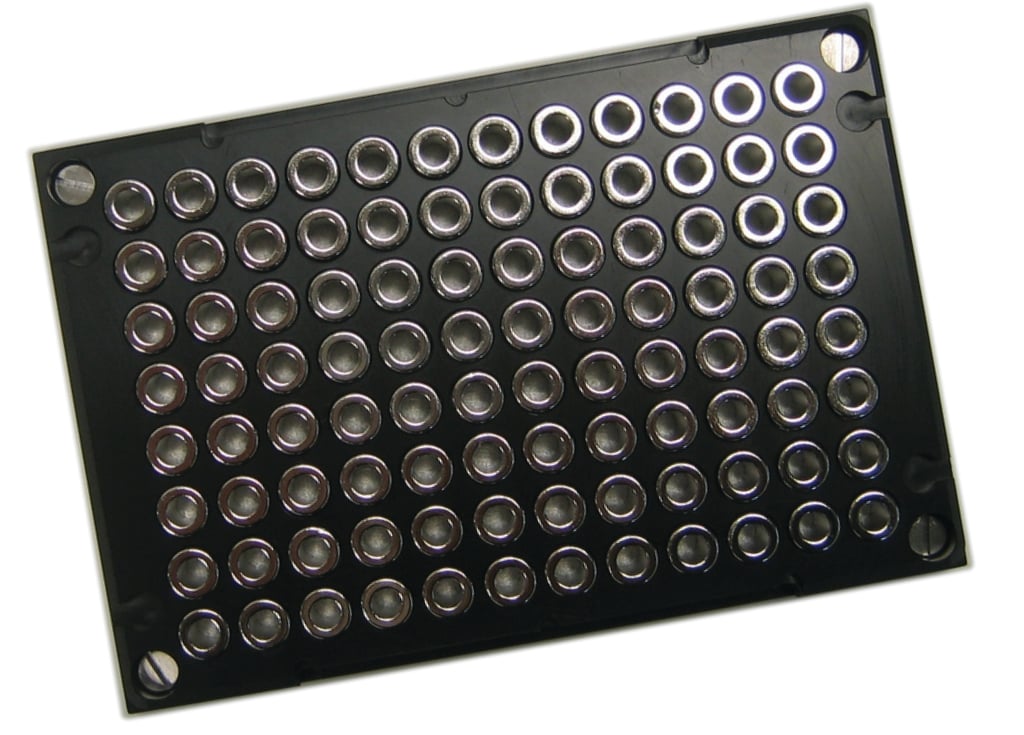
SPRIPlate, 96-well, Super Magnet
Specifically designed for SPRI reagent kits by Beckman Coulter. Has not been validated for use with the CleanSEQ or CosMCPrep reagent systems.
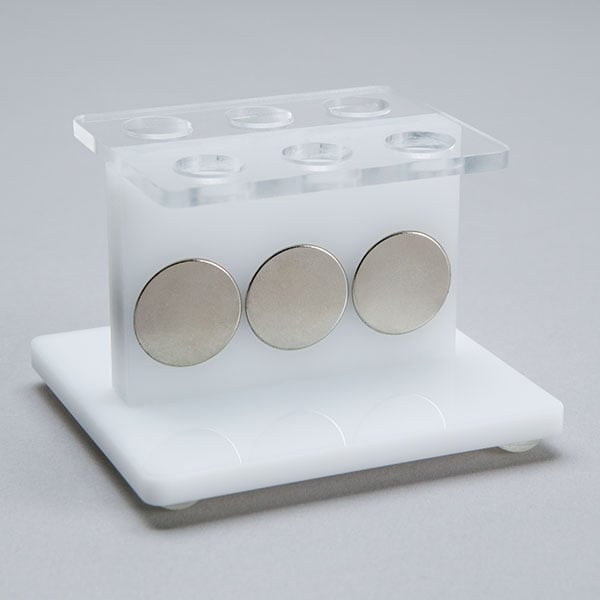
SPRIStand, Tubes
Designed for lower throughput users. The 6-position stand is compatible with 1.5 mL, 1.7 mL and 2.0 mL microcentrifuge tubes.

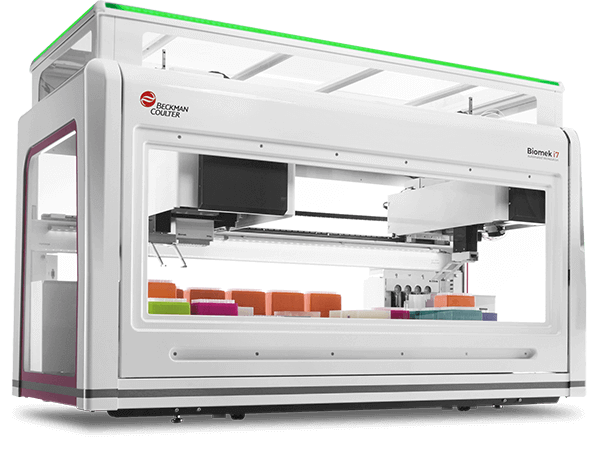
Biomek i3 Benchtop Liquid Handler
The perfect choice for those beginning their journey into lab automation or seeking a simple and affordable yet powerful alternative to more complex systems

Estación de trabajo automatizada Biomek i5
Las estaciones de trabajo automatizadas serie Biomek i de Beckman Coulter han sido diseñadas para optimizar la fiabilidad y la autonomía del personal en laboratorios de medio a alto rendimiento.


Products and demonstrated applications are not intended or validated for use in diagnostic procedures.
